Modern Slavery Statement for Garden Clearance and Garden Waste Removal

Frontline garden clearance team at work This Modern Slavery Statement sets out the commitments of our garden clearance business to identify, prevent and address risks of forced labour, human trafficking and other modern slavery practices within our operations and supply chains. We provide garden clearance and related garden tidy-up services with a clear ethical framework: a zero-tolerance policy towards any form of modern slavery. Our garden clearance services are delivered with respect for human rights and lawful employment.

We operate a robust policy environment and governance structure to ensure that every worker involved in yard clearance, garden waste removal and outdoor site clearing is treated fairly. The board and senior managers endorse this statement and drive compliance through operational procedures, training and procurement standards. All employees and contractors are expected to adhere to our values and to report concerns.

A family of four, including a man, woman, and two children, standing outdoors on a grassy area next to a brick and stone wall. The man is smiling and holding a bright green plastic storage container in his right hand, while the woman is also holding a similar container and looking toward the camera. The two children, a boy and a girl, are positioned between the adults; the girl has long, curly hair and is wearing a grey top with light jeans, holding a green container, and smiling. The boy is dressed in a blue and white striped shirt with dark trousers, standing slightly behind the woman. The scene is set in a garden or yard area, possibly associated with garden clearance or rubbish removal services, with natural daylight illuminating the scene and a relaxed family atmosphere. This image reflects waste management or rubbish collection activities in a residential setting, consistent with services offered by Garden Clearance near [POSTCODE] and in [[TOWN]]. As part of our approach to preventing modern slavery in garden cleanup and garden refuse clearance activities, we maintain specific measures which include supplier due diligence, periodic audits and contractual clauses that prohibit exploitative practices. We require vendors, subcontractors and partners to meet our standards and to provide evidence of lawful recruitment, legitimate pay and safe working conditions.

Zero-Tolerance Policy and Ethical Standards

Our zero-tolerance policy means we will not knowingly engage with or continue to work with any supplier or contractor found to be using forced labour, withholding wages, restricting freedom of movement or coercing staff in any way. The policy applies to all aspects of our garden clearance company operations, from on-site garden tidy-ups to clearance of vegetation and disposal of green waste. Any breach will result in immediate remedial action, up to termination of contracts and referral to the appropriate authorities.

A person’s hand is seen placing a clear plastic water bottle into a black rubbish bin with a liner, situated outdoors on a paved or concrete surface. The background features a well-maintained grassy area with a mixture of light and dark green hues, indicating an open garden or park setting possibly within the vicinity of a property in the UK. The hand appears to be using a gentle grip, holding the bottle by the neck, preparing to dispose of recyclable waste. The water bottle is partially crushed, showing signs of previous use, with a blue cap still attached. The black bin has a slightly reflective surface, with its edges and inner lining visible, suggesting durability and typical design for waste collection. The overall scene emphasizes responsible rubbish disposal practices and aligns with garden clearance or general waste collection services offered by Garden Clearance in local areas, possibly including towns in or around postcode regions in the UK. The natural lighting further indicates a daytime outdoor setting, supporting the context of waste management in residential or community environments. The scene illustrates an element of waste separation and cleanliness typical of United Kingdom rubbish removal procedures. We publish expectations for suppliers and embed anti-slavery provisions into contractual agreements. To support compliance, we carry out training for procurement and site-management staff focused on recognizing signs of exploitation and on implementing safe recruitment practices in the garden removal sector. Education, prevention and decisive action are central to our stance.

Supplier audits form a core part of our mitigation strategy. We conduct risk-based audits and assessments of suppliers supplying equipment, labour or services for garden clearance operations. Audits examine:

  • workforce documentation and right-to-work checks,
  • payment records and wage practices,
  • employment contracts and freedom to terminate,
  • health and safety provisions for garden site workers.

Supplier Audits, Reporting Channels and Accountability

Our supplier audit program blends desktop checks, on-site inspections and third-party verifications when indicated. Audits for garden clearance suppliers are prioritized by risk???geography, business model and workforce vulnerability. If non-compliance is identified, we require corrective action plans with clear timelines and follow-up audits. Persistent or serious violations trigger contract suspension or termination.

A young woman with blonde hair tied in a high ponytail is smiling and wearing a bright green top. She is holding a large, rectangular green sign featuring a white recycling symbol composed of three chasing arrows arranged in a triangular loop. The background of the image is plain white, emphasizing the woman and the recycling sign she is displaying. The overall scene suggests environmental awareness and sustainability, aligning with rubbish disposal and recycling services offered by companies like Garden Clearance operating in the UK. The visual focuses on promoting eco-friendly waste management practices and the importance of recycling waste materials responsibly. We maintain multiple confidential reporting channels for workers, subcontractors and third parties to raise concerns about suspected modern slavery in yard clearance or garden waste collection activities. Reports can be made anonymously through internal whistleblowing mechanisms and are treated seriously. All allegations are investigated promptly, with safeguarding measures for potential victims and referrals to specialist support as necessary. We do not tolerate retaliation.
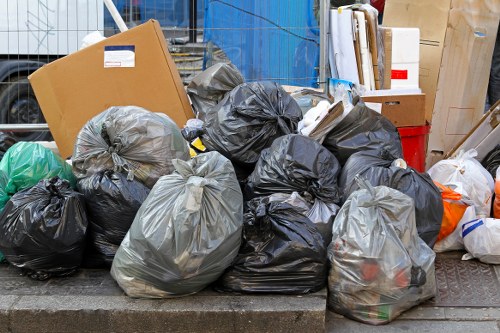
A collection of black and grey plastic rubbish bags, some tied at the top and others loosely gathered, stacked on a curbside pavement area. The bags contain mixed household waste, with visible crinkled and smooth textures of the plastic. Surrounding the bags, there are additional discarded items including a partially visible cardboard box leaning against the bags, and some smaller assorted debris, suggesting recent rubbish collection. In the background, there are wooden pallets, a red bin, and parts of a fenced area, indicating a residential or commercial waste disposal zone near properties in a town, possibly in the postcode area near Gardenclearance.org.uk. The scene appears to be outdoors during daylight, with natural light providing clear visibility of the waste and environment. The arrangement of bags and items suggests rubbish cleared from a property or garden, consistent with local rubbish removal services in the area. Transparency and continuous improvement are essential. We publish progress in our corporate reporting and review our policies regularly. Our annual review process evaluates the effectiveness of controls across the garden clearance supply chain, including the performance of supplier audits, training uptake, reported incidents and remediation outcomes. Findings are used to update risk registers and to strengthen procurement and operational controls.

In summary, our garden clearance practice is governed by a clear commitment to prevent modern slavery, backed by a zero-tolerance stance, risk-based supplier audits, accessible reporting channels and an annual review cycle. We continuously refine our approach to ensure that every aspect of our garden clearance and garden refuse removal activities upholds human rights and labour standards.

Through collaborative engagement with suppliers, consistent enforcement of contractual standards and investment in staff awareness, we strive to make our garden clearance operations free from exploitation. Responsible procurement and diligent oversight will remain core priorities.

We will continue to monitor legal developments, sector-specific risks and emerging best practice in modern slavery prevention and apply lessons learned to our garden clearance procedures and supplier management systems.

Call Now!
Garden Clearance

A Modern Slavery Statement for garden clearance detailing a zero-tolerance policy, supplier audits, reporting channels and an annual review to prevent exploitation across operations and supply chains.

Modern Slavery Statement for Garden Clearance and Garden Waste Removal

Frontline garden clearance team at work This Modern Slavery Statement sets out the commitments of our garden clearance business to identify, prevent and address risks of forced labour, human trafficking and other modern slavery practices within our operations and supply chains. We provide garden clearance and related garden tidy-up services with a clear ethical framework: a zero-tolerance policy towards any form of modern slavery. Our garden clearance services are delivered with respect for human rights and lawful employment.

We operate a robust policy environment and governance structure to ensure that every worker involved in yard clearance, garden waste removal and outdoor site clearing is treated fairly. The board and senior managers endorse this statement and drive compliance through operational procedures, training and procurement standards. All employees and contractors are expected to adhere to our values and to report concerns.

A family of four, including a man, woman, and two children, standing outdoors on a grassy area next to a brick and stone wall. The man is smiling and holding a bright green plastic storage container in his right hand, while the woman is also holding a similar container and looking toward the camera. The two children, a boy and a girl, are positioned between the adults; the girl has long, curly hair and is wearing a grey top with light jeans, holding a green container, and smiling. The boy is dressed in a blue and white striped shirt with dark trousers, standing slightly behind the woman. The scene is set in a garden or yard area, possibly associated with garden clearance or rubbish removal services, with natural daylight illuminating the scene and a relaxed family atmosphere. This image reflects waste management or rubbish collection activities in a residential setting, consistent with services offered by Garden Clearance near [POSTCODE] and in [[TOWN]]. As part of our approach to preventing modern slavery in garden cleanup and garden refuse clearance activities, we maintain specific measures which include supplier due diligence, periodic audits and contractual clauses that prohibit exploitative practices. We require vendors, subcontractors and partners to meet our standards and to provide evidence of lawful recruitment, legitimate pay and safe working conditions.

Zero-Tolerance Policy and Ethical Standards

Our zero-tolerance policy means we will not knowingly engage with or continue to work with any supplier or contractor found to be using forced labour, withholding wages, restricting freedom of movement or coercing staff in any way. The policy applies to all aspects of our garden clearance company operations, from on-site garden tidy-ups to clearance of vegetation and disposal of green waste. Any breach will result in immediate remedial action, up to termination of contracts and referral to the appropriate authorities.

A person’s hand is seen placing a clear plastic water bottle into a black rubbish bin with a liner, situated outdoors on a paved or concrete surface. The background features a well-maintained grassy area with a mixture of light and dark green hues, indicating an open garden or park setting possibly within the vicinity of a property in the UK. The hand appears to be using a gentle grip, holding the bottle by the neck, preparing to dispose of recyclable waste. The water bottle is partially crushed, showing signs of previous use, with a blue cap still attached. The black bin has a slightly reflective surface, with its edges and inner lining visible, suggesting durability and typical design for waste collection. The overall scene emphasizes responsible rubbish disposal practices and aligns with garden clearance or general waste collection services offered by Garden Clearance in local areas, possibly including towns in or around postcode regions in the UK. The natural lighting further indicates a daytime outdoor setting, supporting the context of waste management in residential or community environments. The scene illustrates an element of waste separation and cleanliness typical of United Kingdom rubbish removal procedures. We publish expectations for suppliers and embed anti-slavery provisions into contractual agreements. To support compliance, we carry out training for procurement and site-management staff focused on recognizing signs of exploitation and on implementing safe recruitment practices in the garden removal sector. Education, prevention and decisive action are central to our stance.

Supplier audits form a core part of our mitigation strategy. We conduct risk-based audits and assessments of suppliers supplying equipment, labour or services for garden clearance operations. Audits examine:

  • workforce documentation and right-to-work checks,
  • payment records and wage practices,
  • employment contracts and freedom to terminate,
  • health and safety provisions for garden site workers.

Supplier Audits, Reporting Channels and Accountability

Our supplier audit program blends desktop checks, on-site inspections and third-party verifications when indicated. Audits for garden clearance suppliers are prioritized by risk???geography, business model and workforce vulnerability. If non-compliance is identified, we require corrective action plans with clear timelines and follow-up audits. Persistent or serious violations trigger contract suspension or termination.

A young woman with blonde hair tied in a high ponytail is smiling and wearing a bright green top. She is holding a large, rectangular green sign featuring a white recycling symbol composed of three chasing arrows arranged in a triangular loop. The background of the image is plain white, emphasizing the woman and the recycling sign she is displaying. The overall scene suggests environmental awareness and sustainability, aligning with rubbish disposal and recycling services offered by companies like Garden Clearance operating in the UK. The visual focuses on promoting eco-friendly waste management practices and the importance of recycling waste materials responsibly. We maintain multiple confidential reporting channels for workers, subcontractors and third parties to raise concerns about suspected modern slavery in yard clearance or garden waste collection activities. Reports can be made anonymously through internal whistleblowing mechanisms and are treated seriously. All allegations are investigated promptly, with safeguarding measures for potential victims and referrals to specialist support as necessary. We do not tolerate retaliation.

A collection of black and grey plastic rubbish bags, some tied at the top and others loosely gathered, stacked on a curbside pavement area. The bags contain mixed household waste, with visible crinkled and smooth textures of the plastic. Surrounding the bags, there are additional discarded items including a partially visible cardboard box leaning against the bags, and some smaller assorted debris, suggesting recent rubbish collection. In the background, there are wooden pallets, a red bin, and parts of a fenced area, indicating a residential or commercial waste disposal zone near properties in a town, possibly in the postcode area near Gardenclearance.org.uk. The scene appears to be outdoors during daylight, with natural light providing clear visibility of the waste and environment. The arrangement of bags and items suggests rubbish cleared from a property or garden, consistent with local rubbish removal services in the area. Transparency and continuous improvement are essential. We publish progress in our corporate reporting and review our policies regularly. Our annual review process evaluates the effectiveness of controls across the garden clearance supply chain, including the performance of supplier audits, training uptake, reported incidents and remediation outcomes. Findings are used to update risk registers and to strengthen procurement and operational controls.

In summary, our garden clearance practice is governed by a clear commitment to prevent modern slavery, backed by a zero-tolerance stance, risk-based supplier audits, accessible reporting channels and an annual review cycle. We continuously refine our approach to ensure that every aspect of our garden clearance and garden refuse removal activities upholds human rights and labour standards.

Through collaborative engagement with suppliers, consistent enforcement of contractual standards and investment in staff awareness, we strive to make our garden clearance operations free from exploitation. Responsible procurement and diligent oversight will remain core priorities.

We will continue to monitor legal developments, sector-specific risks and emerging best practice in modern slavery prevention and apply lessons learned to our garden clearance procedures and supplier management systems.

Get In Touch With Us.

Please fill out the form and we will get back to you as soon as possible.