 Recycling and Sustainability for Garden Clearance
Our garden clearance programme is built around measurable environmental outcomes and local collaboration. We believe every garden waste clearance job is an opportunity to divert materials from landfill, support community reuse and lower carbon emissions. That is why we set a clear recycling percentage target and design services ??? from mini-clearances to full-scale garden reclamations ??? around reuse, composting and responsible disposal.
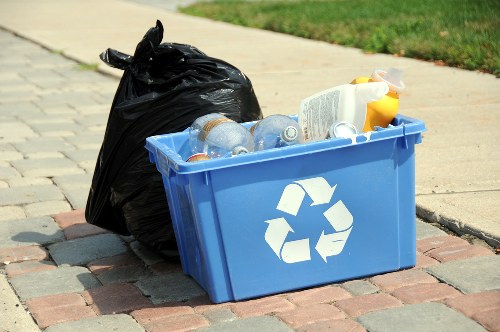
 We work with borough councils and local waste teams to align garden clearance operations with municipal recycling rules. Many boroughs operate separate-stream collection systems that encourage green waste, food waste, paper and glass to be separated at source. Our teams respect those approaches by sorting on-site where practical and ensuring contaminants are removed before materials reach transfer stations.
Our Recycling Percentage Target and Timeline
We have an ambitious recycling percentage target: to achieve an 85% recycling and reuse rate for all collected garden and landscape materials within five years. That target covers green waste, timber, soil, paving and any small amounts of household bulky items that sometimes accompany garden clearances. The aim is not just to recycle more, but to reuse smarter ??? prioritising repair, donation and composting ahead of energy-from-waste where possible.
 To reach the 85% goal we track outputs at every stage: transfer station receipts, charity donation volumes, composting facility intake and certified recycling records. Data-driven route planning and regular audits are used to reduce contamination and improve capture rates for recyclable fractions such as wood, metals and clean hardcore.
Local Transfer Stations and Borough Practices
We partner with a network of licensed local transfer stations that accept segregated green waste, timber for chipping, soil and inert materials. Using nearby sites reduces haul distances and lets us access specialised processing ??? for example, municipal composting plants that accept garden clippings and woody material. Our approach is to match the right material to the right facility.
Typical borough-level practices we follow include:
- Source separation of garden waste and food waste under local council collection schemes.
- Designation of clean timber for chipping and reuse, keeping treated timber separate.
- Segregation of soils, gravels and bricks so inert materials can be reclaimed or crushed for reuse in landscaping.
- Capture of recyclable metals and plastics for municipal recycling streams.
Partnerships with Charities and Community Reuse
Our garden clearance services place a strong emphasis on donation and community benefit. We work with local charities, community allotments, social enterprises and habitat groups to channel reusable items ??? raised beds, planters, salvaged paving, garden furniture and hand tools ??? back into the community. These partnerships not only extend the life of materials but also support job training and neighborhood projects.
Examples of reuse activity include redistributing usable paving slabs to community gardens, supplying chipped wood to local parks teams for mulching and delivering surplus topsoil to allotment projects. Where items are suitable for resale, they are offered to vetted reuse charities ahead of recycling.
Low-Carbon Vans and Fleet Measures
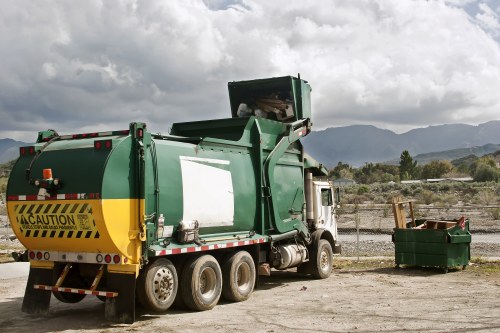 Our fleet transition is central to reducing the carbon footprint of garden clearance operations. We deploy low-emission and electric vans for urban collections and hybrid vehicles for longer runs. Vehicle selection is based on payload needs, route density and charging infrastructure availability. Combining electric vans with optimised scheduling reduces idling and kilometres travelled.
 Other fleet measures include telematics-driven route optimisation, driver training for eco-driving, and regular maintenance to keep vehicles efficient. For larger or rural clearances we use Euro-6 compliant vehicles and explore biodiesel blends where electric alternatives are not yet practical. The result is a measured reduction in CO2 per job while maintaining reliable garden clearance service levels.
Materials Processing, Composting and Circular Outcomes
Wherever possible, green material is processed into compost, mulch or woodchip. Clean timber is chipped and returned to landscaping projects; leaf litter and soft prunings go to aerobic composting. Inert materials such as brick and stone are separated for crushing and reuse in hard landscaping. These circular outcomes help local councils and communities close material loops.
We continually review best practices and invest in staff training to improve on-site sorting. Communication with borough waste officers and transfer station operators ensures that our garden clearance and green waste handling remain compatible with changing local waste separation rules, enabling higher capture rates and fewer rejections at facilities.
Transparent Reporting and Continuous Improvement
We publish annual sustainability reports that summarise recycling rates, charter partnerships, diversion from landfill and fleet emissions. Transparency helps us and our partners measure progress towards the 85% recycling target, adapt to borough policy updates and identify opportunities for innovation in garden waste clearance and reuse.
By combining local transfer partnerships, charity reuse schemes and a low-carbon fleet, our garden clearance offer aims to be both environmentally responsible and practically effective ??? minimizing waste, benefiting communities and cutting carbon across every clearance we undertake.